
Voicelift in the Classroom – Better Sound for Students, a Better Work Environment for Teachers
Anyone who has taught knows how it feels after a long day: your voice is hoarse, your throat is dry, and the students in the back have still missed some of the material. Voicelift is an easy way to change that. Here, we explain what it is, why it’s needed, and how it improves the work environment
- Fast Deliveries!
- Any Questions? We will help you!
- Multiple payment options!
- BrandS-TRACK
Description
What is a Voicelift?
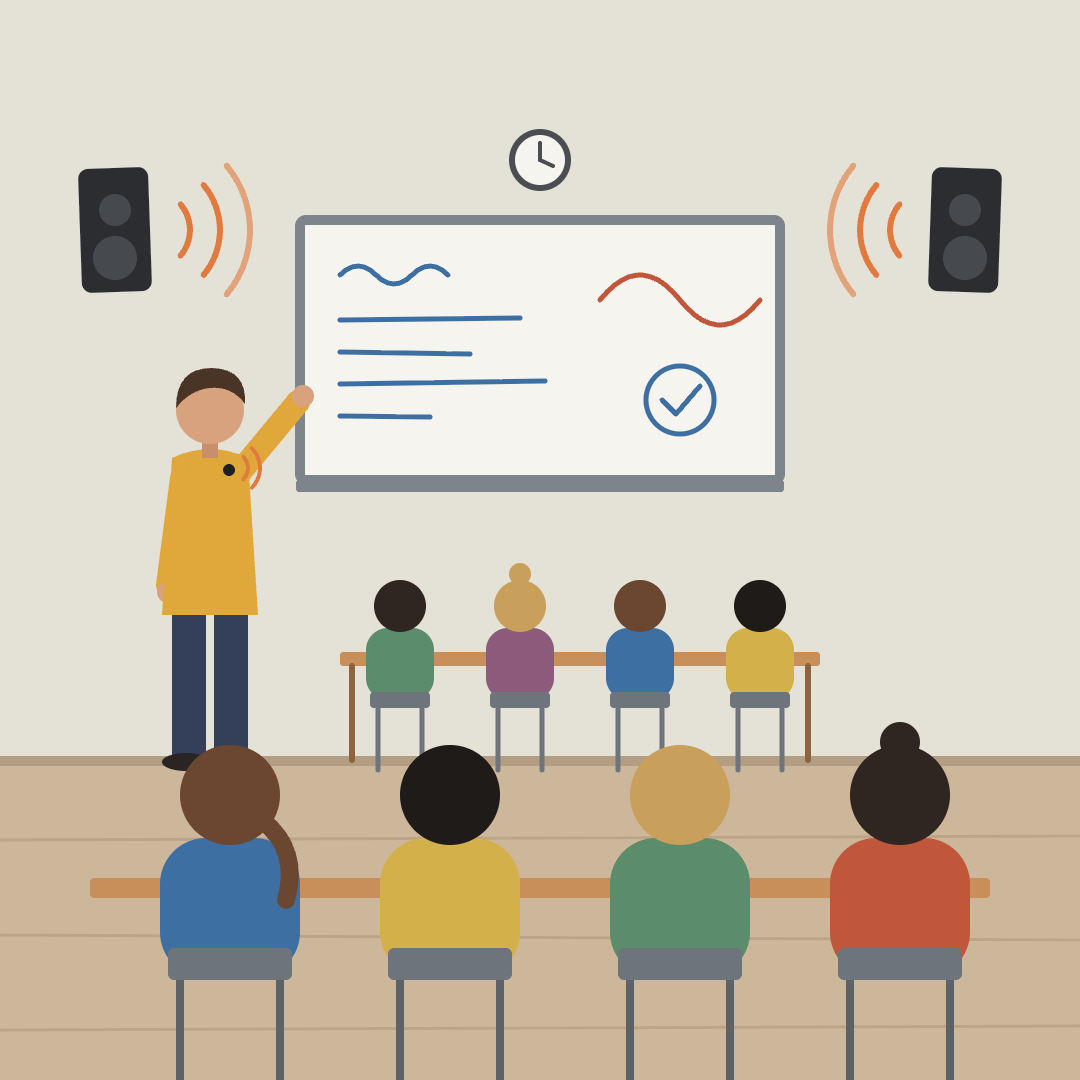
Voicelift, or a sound equalization system as it’s often called in Swedish schools, amplifies the teacher’s voice and distributes it evenly throughout the room. The goal isn’t to make the voice sound loud, but to ensure it’s heard equally clearly throughout the entire classroom. The teacher wears a small wireless microphone, and a pair of speakers distribute the sound.
Why is it needed?
How well we perceive speech depends on how much louder the voice is than the background noise. Children need a greater difference than adults to hear clearly. The requirement is even higher for students who are listening in a language other than their native language or who have a hearing impairment.
There’s always noise in a classroom: ventilation, chairs, computers, the hallway outside. The farther away from the teacher a student sits, the fainter the voice becomes relative to the background noise. This disproportionately affects the students who already have the hardest time:
- students with hearing impairments, even temporary ones such as those caused by an ear infection
- students with concentration difficulties or neurodevelopmental disorders
- students with reading and writing difficulties
- students for whom Swedish is a second language
When students have trouble hearing, there’s also more restlessness in the classroom, and the noise level rises. The teacher raises their voice, and the cycle begins.
Workplace health and safety issues that Voicelift can address
Vocal strain. Teachers are among the professions that place the greatest demands on the voice and are overrepresented among patients at voice clinics. Researchers at Karolinska Institutet describe work-related voice problems as common among teachers, and these can lead to long-term sick leave. With Voicelift, teachers can speak in a normal voice all day long.
Fatigue and stress. Constantly straining to be heard is exhausting. Less effort means more energy left for the actual teaching.
The classroom sound environment. When everyone can hear without straining, the atmosphere becomes calmer. Teachers using sound equalization in Uppsala’s elementary schools report largely positive effects on the sound environment and communication.
Equality. A student’s seat in the room should not determine how well they can hear. Voicelift provides everyone with the same conditions, and the adjustment applies to the entire class rather than a single student.
Here’s how Voicelift can be used
- Reviews and lectures: The teacher can move freely—at the board or among the desks—without their voice fading.
- Group discussions and presentations: The microphone can be passed around so that even students with soft voices can be heard.
- Recording and distance learning: With a digital output, the same audio can be sent to a recording or a video conference.
- Gyms, auditoriums, and cafeterias: The same principle works in large, echo-prone rooms.
What should you consider when choosing a system?
Choose a system that’s easy to use every day. The microphone should be lightweight and comfortable, the battery should last a full school day, and the system should not produce feedback. It should also be possible to have multiple classrooms next to each other without interference.
Our LARK Classroom Kit from S-Track is designed specifically for this: a 10-gram microphone, built-in feedback suppression, up to 18 hours of battery life with a charging case, and a pair of speakers optimized for classrooms. Contact us at Visono Media if you’d like to learn more or test it at your school.