

BlueZOO - Count (license)
- Fast Deliveries!
- Any Questions? We will help you!
- Multiple payment options!
- BrandBLUEZOO
Description
Article no.: 187-0012
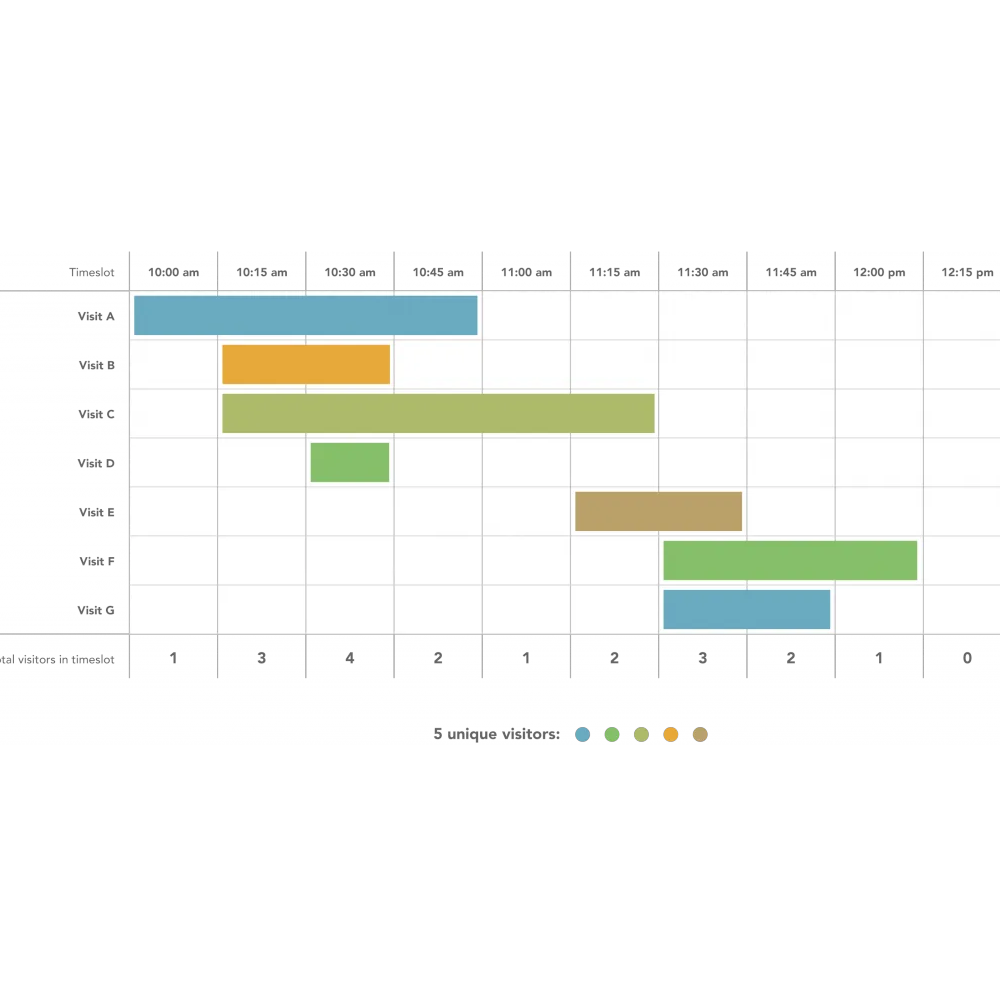
BlueZoo Count measures "visitors" at a specific time and aggregates the number of "visits" over a period of time. The sensors report probes from cell phones several times per minute, keeping the real-time count accurate. While the number of visitors is equal to the number of ongoing visits, the number of visits over the course of a day is usually much higher than the number of visitors at a given time.
Measuring activity
In the image above, the number of visits during this time period is measured as 7. Visits during the first half of the time period amount to 4, and visits during the second half amount to 3. Unique visitors (marked with color) amount to 5.
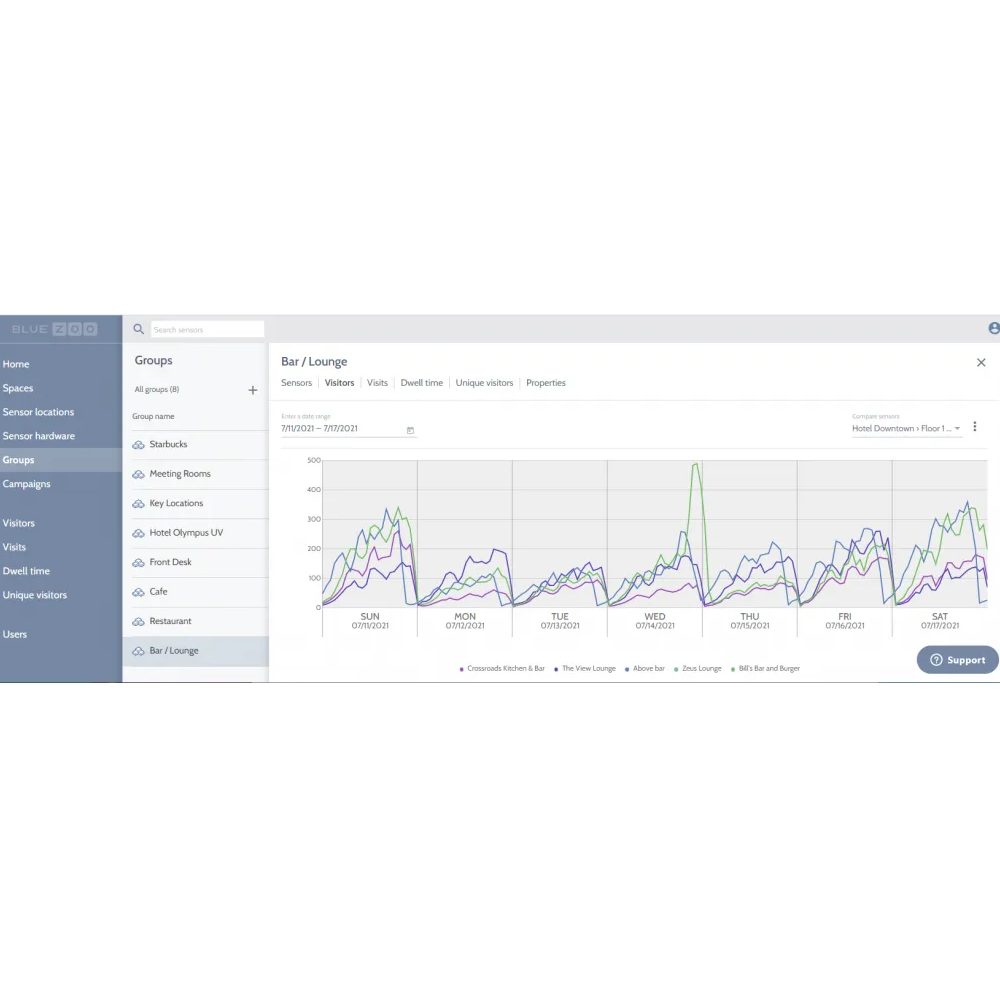
The Bluezoo cloud service records historical values for the number of visitors (occupancy at a given time), visits started and visits ended, with a resolution of fifteen minutes for subsequent analysis.
Usage
For each fifteen-minute period, Bluezoo Count reports:
- The number of visits started
- Number of visits ended
- Maximum number of visitors
- Minimum number of visitors
- Average number of visitors
Measuring visitors in real time is important for controlling crowds, production and staffing. Measuring visits is important for businesses that rely on customer transactions - and also for advertising, which does not.
Different businesses exhibit different profiles of visitors and footfall. Beer stands at sporting events tend to have large numbers of visitors, but often for short intervals separated by periods of inactivity. Refreshment inventory requirements correlate with the number of visits, rather than the number of visitors. Identifying crowding in environments such as university canteens, on the other hand, requires understanding the maximum number of visitors in real time.
The number of visits over a period of time (e.g. an hour or a day) must be at least equal to the maximum number of visitors at any point in that period, even though one visitor may account for multiple visits.
Licenses
To work, the sensor needs to be combined with one or more licenses. The basic license is called Count and is always needed. Then you can build on in the following order:
If you have Count, you can add Analyze.
If you have Analyze, you can add Convert and/or Flow.